Peer-Review Publications
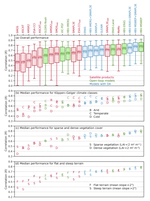
Parameter Estimation in Land Surface Models: Challenges and Opportunities With Data Assimilation and Machine Learning
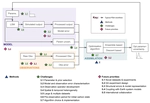
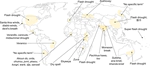
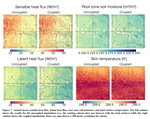
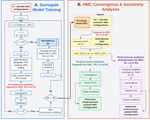
Improving the accuracy of land surface models (LSMs) is crucial for reducing uncertainties in climate change projections. Parameter data assimilation (DA), which fine-tunes model parameters to better match observed data, is key to enhancing LSM performance. However, the complexity of LSMs poses challenges for global optimization. Advances in computational power, novel data sets, and machine learning (ML) offer promising solutions to improve LSMs. ML can streamline the DA process, handling large data sets and reducing computational demands. This article discusses the progress made in LSM parameter estimation and the challenges faced by the community. We then discuss how ML can help address these challenges and outline future priorities. International collaboration, fostered by initiatives like the Analysis, Integration and Modeling of the Earth System Land DA Working Group and the International Land Model Forum, is essential for accelerating progress, facilitating knowledge exchange, and developing standardized methods for more accurate climate modeling.
Parameter Estimation in Land Surface Models: Challenges and Opportunities With Data Assimilation and Machine Learning
Increased Amazon evapotranspiration since 1990 in a warming climate
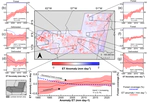
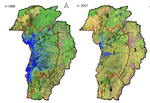
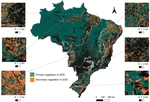
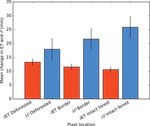
The Brazilian Amazon Forest is experiencing alterations in water fluxes driven by agriculture expansion and climate change, which …
Increased Amazon evapotranspiration since 1990 in a warming climate
Accelerating River Discharge in High Mountain Asia
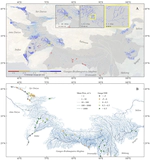
High Mountain Asia (HMA) plays a crucial role in Asian hydrology—its vast snow and glacier-covered landscape significantly influences …
Accelerating River Discharge in High Mountain Asia
Dynamic geospatial modeling of mycotoxin contamination of corn in Illinois: unveiling critical factors and predictive insights with machine learning
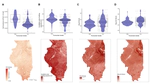
Mycotoxin contamination of corn is a pervasive problem that negatively impacts human and animal health and causes economic losses to …
Dynamic geospatial modeling of mycotoxin contamination of corn in Illinois: unveiling critical factors and predictive insights with machine learning
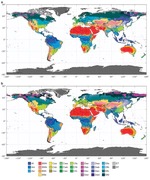
High-resolution (1 km) Köppen-Geiger maps for 1901–2099 based on constrained CMIP6 projections
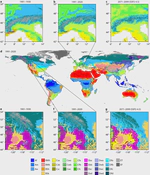
We introduce Version 2 of our widely used 1-km Köppen-Geiger climate classification maps for historical and future climate conditions. …
High-resolution (1 km) Köppen-Geiger maps for 1901–2099 based on constrained CMIP6 projections
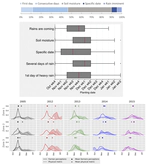
How Much Control do Smallholder Maize Farmers Have Over Yield?
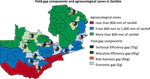
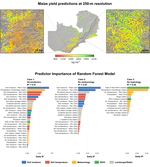
Smallholder agriculture is critical for current and future food security, yet quantifying the sources of smallholder yield variance …
How Much Control do Smallholder Maize Farmers Have Over Yield?
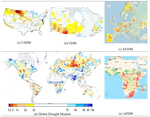
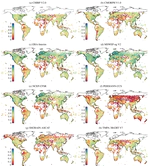
High-Resolution Soil Moisture Data Reveal Complex Multi-Scale Spatial Variability Across the United States
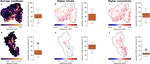
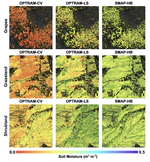
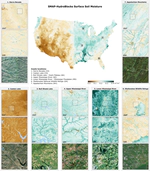
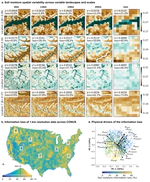
Soil moisture (SM) space and time variability critically influences freshwater resources, agriculture, ecosystem dynamics, climate and land-atmosphere interactions, and it can also trigger hazards such as droughts, floods, landslides, and aggravate wildfires. Here, we present the first continental assessment of how SM varies at the local scales using SMAP-HydroBlocks. This study maps the SM spatial variability, characterizes the landscape drivers, and quantifies how this variability persists across larger spatial scales. Results revealed striking SM spatial variability across the United States. However, this SM variability does not persist at coarser spatial scales resulting in extensive information loss. This information loss implicates inaccuracies when predicting non-linear SM-dependent hydrological, ecological, and biogeochemical processes using coarse-scale models and satellite estimates.
High-Resolution Soil Moisture Data Reveal Complex Multi-Scale Spatial Variability Across the United States
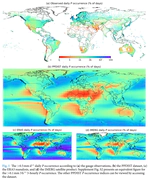
PPDIST, global 0.1° daily and 3-hourly precipitation probability distribution climatologies for 1979–2018
We introduce the Precipitation Probability DISTribution (PPDIST) dataset, a collection of global high-resolution (0.1°) …
PPDIST, global 0.1° daily and 3-hourly precipitation probability distribution climatologies for 1979–2018
Combining hyper-resolution land surface modeling with SMAP brightness temperatures to obtain 30-m soil moisture estimates
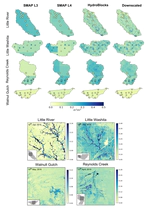
Satellite missions measuring soil moisture from space continue to improve the availability of soil moisture information. However, the utility of these satellite products is limited by the large footprint of the microwave sensors. This study presents a merging framework that combines a hyper-resolution land surface model (LSM), a radiative transfer model (RTM), and a Bayesian scheme to merge and downscale coarse resolution remotely sensed hydrological variables to a 30-m spatial resolution. The framework is based on HydroBlocks, an LSM that solves the field-scale spatial heterogeneity of land surface processes through interacting hydrologic response units (HRUs). Our approach was demonstrated for soil moisture by coupling HydroBlocks with the Tau-Omega RTM used in the Soil Moisture Active Passive (SMAP) mission. The brightness temperature from the HydroBlocks-RTM and SMAP L3 were merged to obtain updated 30-m resolution soil moisture estimates.
Combining hyper-resolution land surface modeling with SMAP brightness temperatures to obtain 30-m soil moisture estimates
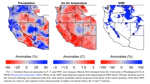
Forecasting the Hydroclimatic Signature of the 2015/16 El Niño Event on the Western United States
Dry conditions in 2013–16 in much of the western United States were responsible for severe drought and led to an exceptional fire …
Forecasting the Hydroclimatic Signature of the 2015/16 El Niño Event on the Western United States